



Set fabrics a simple and cost-effective technique to customize textiles. You can choose any internet image or create your own designs for special occasions, such as anniversaries or Baby Showers, and put them in the garment.
In Very Unique we work three different materials so you can customize your clothes and other objects.
Synthetic fabric
If the label does not come pre-cut, cut it as far as possible leaving a blank margin.
- Picked with Adhesivo:
- Apply a fine, uniform layer of transparent contact adhesive (Eccole, Suprabond, or similar) at the back of the label.
- Place the label in the desired position on the garment.
- Press firmly to ensure good adherence.
- Manual sewn:
- I sewed the label around the edges leaving at least 4mm between the edge of the label and the seam.
- Combination of Paste and Seam:
- For greater durability, you can choose to paste the label first and then sew it around the edges.
Transfer
How do I identify the transfer paper for clear and dark clothing / fabric?
The paper transfer is divided into paper transfer for clear fabrics and paper transfer for dark fabrics, the distinction between these two types of paper is based on the color of the garment to which you want to transfer the image.
- If the garment is dark or of intense colorsIt's better to use the transfer paper for dark fabrics.
- But if your clothes are clear or whiteYou can use either one, but the clear-clothes transfer is easier to use.
To identify them, you will mainly notice that the printing on the paper transfer for clear clothes is mirrored, this is because the label is placed face down. In addition, the subsequent printing of the transfer paper of the different categories is different. Notes the back of the paper:
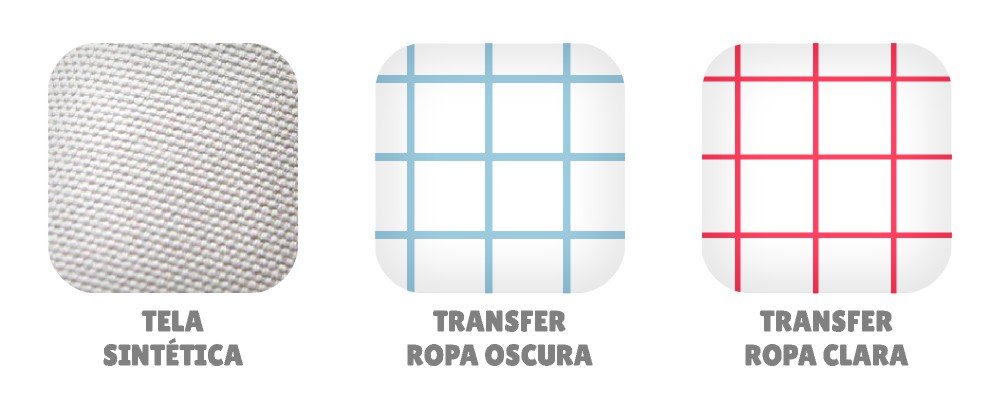
- Transfer Paper for Dark Tails: It has blue lines in the back.
- Transfer Paper for Clare Telas: The rear printing shows red lines.
What textiles can be stamped with Transfer?
The ideal textiles are those containing 100% cotton, although they can also have up to 30% synthetic material. Some cotton fabrics that you can print include: Canvas, Tusor, Gabardina, Panama, Canvas, Loneta, Lona, Jersey, Interlock, Modal and Gasa.
If you are not sure if the material of the garment you want to wear is appropriate, try in a small and discreet area of the garment to see how the fabric reacts to the heat without damaging the whole garment.
Transfer Process
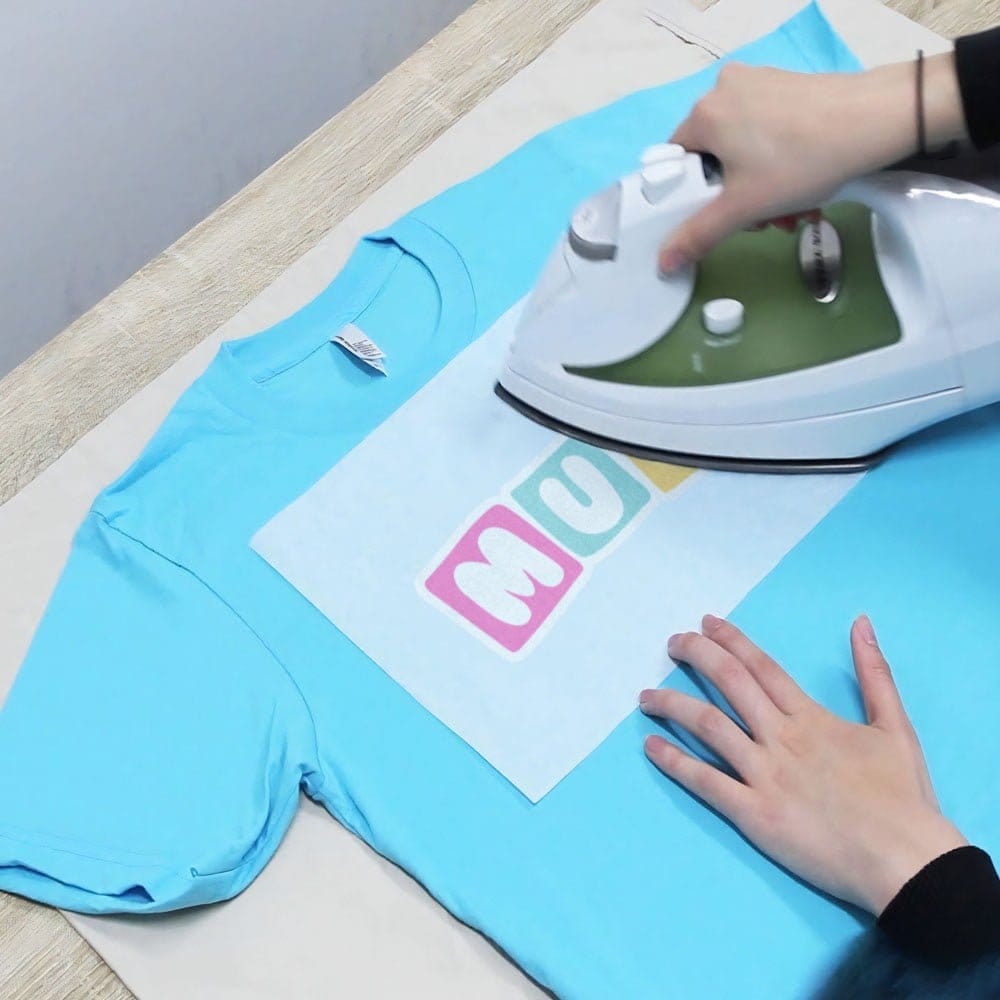
We recommend you to prepare a working space with all the necessary elements. If you have an ironing board, place it in a ventilated, damp-free environment. You can also do this on a firm table with a towel, sheet or blanket of clean and dry cotton, the latter is important as the moisture can prevent the transfer from taking off after applying it.
- Preparation: Make sure the garment is clean and dry. If you are using a home-made plate, let it heat to the maximum possible temperature.
- Pre-ironing of the garment: Plate the garment to remove any wrinkle or moisture. This will ensure that the transfer is carried out properly.
- Positioning of the transfer paper: Place the transfer paper on top of the fabric.
* If you are using Clara Clothing Transfer (with the letters backwards / mirror image and the back has a red ring), place the print looking down.
* If you are using Dark Clothing Transfer (with a blue ring on the back), remove the protective paper from the back (as if it were a sticker) and support the label on the clothes with the printing looking up. - Heat application and transfer: I protected the direct heat label with the spare protective paper, another paper or a fine fabric. Apply the plate above and make circular movements on the stamping by applying pressure for approximately 4 minutes.
- Cooling and review: Once finished, let it cool a little and check that the transfer has adhered well to the fabric, if you notice that the transfer is taken off, try to increase the temperature and repeat the previous step.
For better resistance to use and washing, you will estimate the garment in the area of the picture with your fingers, allowing it to soften a little and allow the permeability of air and liquids. This is optional.
Washing Care
- Wait 24 hours before washing the garment for the first time.
- Wash the fabric with cold water.
- It is recommended to wash with washing machines and not by hand.
- Do not use very aggressive detergents or whitening.
- Plate the stamping alone on the back.
- Dry the garment in the shadow and not in the sun.
- Do not let the garment be removed for very long periods.
- Dry in machines using low heat.


